


The star has given the entirety of his £25,000 Mercury Prize winnings to the Music Venues Trust, which functions to save the Britain's grassroots music venues.
The star was given the award on mid-October as his third album his work was declared the outstanding release of the last 12 months.
The musician has opted to hand the money over to the Music Venues Trust, in recognition of the vital role grassroots venues had in his early career.
"I wouldn't be doing what I am doing today if it wasn't for all the gigs I played around the area, and further afield, when I was just getting going," remarked Sam Fender. "These spaces are iconic, but they are facing challenges."
From early 2023 onward, at least 150 of these locations have shut down – approximately 16 percent of the whole industry in the UK.
Recently, top acts including the band Pulp, Coldplay, the singer Katy Perry and Sheeran have all supported the trust in its efforts to help venues survive, by including a small levy to their ticket prices, which goes to help local stages.
Fender also participated, generating over £100k on his 2024 arena tour to assist 38 local spots across England, Scotland, and Wales.
These funds helped locations that were dealing with possible closure due to challenges caused by flooding, fire incidents and personal losses, as well as permit problems, conflicts and sound issues.
Additional spaces obtained financial assistance in modernizing facilities and technical equipment that directly benefitted artists and fans.
"The idea that revenue from shows in big venues backs the local stages, where it kicks off for performers like me, is just sensible," Fender has commented.
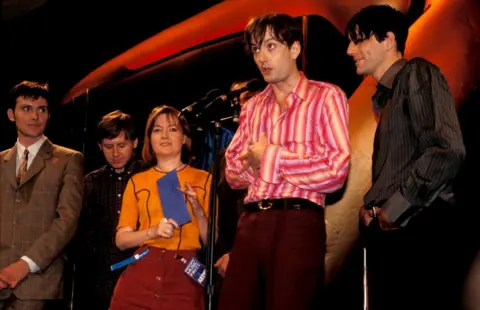
Fender is far from the only musician to give his Mercury Prize funds to worthy causes.
In the band earned the prize in 1996 for their release their work, lead singer Jarvis Cocker stated that the act would contribute their prize money to the organization War Child.
In 2002, musician the artist divided her prize between a few good causes, such as the NSPCC and a Sickle Cell organization.
"And I contributed a grand to my local community centre, to their classes, because I trained in gymnastics when I was younger and they needed updated gear," she explained to outlets.
In recent years, they contributed their prize money to the community center that supported their act, as well as other grassroots music organisations.
And the 1994 recipients they donated their prize to a multiple sclerosis charity after a close contact was diagnosed the condition.
"Receiving the award was sufficient," stated singer Small. "The cash was the extra but we could do without the extra, because we had the cake. So our winning impacted the lives of others."
In the past week, the MVT shared it had rescued a couple of small stages in that region, by transferring them to community ownership.
The first in that area and the second in Bristol were acquired under the public acquisition program, which is backed by Arts Council England and enthusiasts who purchase "shares" in the venues.


